
In the winding, ancient alleys of Varanasi, food is not merely a biological necessity; it is a spiritual dialogue with the divine. Known variously as Varanasi, Banaras, or the City of Lights, it has a culinary identity that is as old as its stone-carved temples. In 2026, as the city embraces modernisation with ropeways and smart ghats, the food remains a steadfast anchor to its past—rooted in the concept of Sattvik purity and the blessings of Maa Annapurna, the Goddess of Nourishment.
To understand Kashi’s food is to understand its rhythm. The city’s palate changes with the sun, the seasons, and the sacred ceremonies that define life on the Ganges.
The Sunrise Ritual: Kachori and Jalebi
For a Banarasi, the day begins with the sound of hissing oil. The sunrise over the ghats is incomplete without a visit to Kachori Gali. Here, the air is thick with the scent of hing (asafoetida) and frying dough.
- Kachori Sabzi: The quintessential breakfast. You’ll find two types: the Badi Kachori (stuffed with spiced lentils) and the Choti Kachori (flaky and bite-sized). They are served with a spicy, soul-warming potato gravy (Rassa) that is cooked without onion or garlic, relying instead on ginger, green chilies, and a proprietary blend of warm spices.
- The Sweet Contrast: A plate of hot, syrup-dripping Jalebis is the mandatory companion. The interplay of the spicy curry and the fermented, crunchy sweetness of the jalebi is the “Banarasi Breakfast of Champions.”
- Where to find it: Ram Bhandar in Thatheri Bazar and Chachi ki Kachori near Lanka remain the gold standards in 2026.
The Midday Soul: Baati Chokha and Sattvik Thalis
As the sun climbs higher, the city shifts toward heartier, rustic meals. Kashi’s location in the Purvanchal region brings a heavy influence from neighboring Bihar, most notably in the form of Baati Chokha.
- Baati Chokha: Wheat balls (baatis) are stuffed with sattu (roasted gram flour mixed with spices) and roasted over open cow-dung fires, giving them a distinct smoky flavor. These are served with Chokha—a mash of roasted eggplants, tomatoes, and potatoes seasoned with mustard oil and raw chilies. It is a humble, earthy meal that provides enough energy for a day of temple-hopping.
- The Temple Thali: For those seeking a more formal meal, the Sattvik Thali is a masterclass in Ayurvedic cooking. Restaurants like Shree Shivay serve meals in Kansa (bell metal) vessels, which are believed to have health benefits. These thalis feature seasonal vegetables, dal tempered with desi ghee, and handmade rotis, all prepared with the utmost ritual purity.
The Winter Miracle: Malaiyyo
If you visit Kashi between November and February, you are privy to a culinary miracle called Malaiyyo (also known as Nimish).
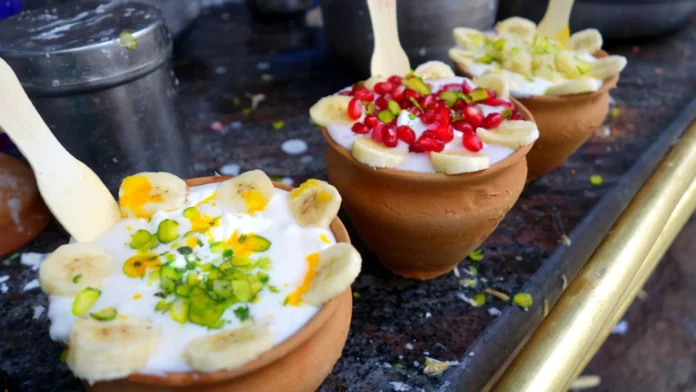
This is not just a dessert; it is an atmospheric event. Legend has it that milk is left in open vessels overnight to be “kissed by the dew.” By morning, it is hand-churned into a froth so light it feels like eating a cloud. Infused with saffron, cardamom, and topped with pistachios, Malaiyyo is a seasonal ghost—it disappears the moment the first summer heat hits the city.
The Evening Alchemists: Chaat and Street Magic
As dusk settles and the evening Aarti begins, the street food scene hits its peak. Varanasi’s chaat is fundamentally different from the versions found in Delhi or Mumbai.
- Tamatar Chaat: This is Kashi’s signature invention. Mashed tomatoes are cooked with spices, dollops of ghee, and khoya (milk solids), then topped with crunchy namak pare and a drizzle of lemon. It is tangy, rich, and served piping hot in a dona (leaf bowl).
- Choora Matar: The Banarasi take on Poha. Flattened rice is soaked in milk or ghee and tossed with fresh green peas, black pepper, and raisins. It is a textural delight—soft, nutty, and mildly sweet.
- Where to find it: Kashi Chat Bhandar and Deena Chaat Bhandar near Godowlia remain iconic landmarks where travelers and locals stand shoulder-to-shoulder.
Liquid Devotion: Thandai and Lassi
In a city dedicated to Lord Shiva, drinks are often more than just refreshments.
- Banarasi Lassi: Unlike the thin, drinkable lassis of the West, the Banarasi version is a meal in itself. It is thick, hand-churned, and served in a kulhad (clay cup), topped with a massive layer of Malai (cream) and Rabri. Blue Lassi Shop near Manikarnika Ghat continues to be a pilgrimage site for travelers, offering dozens of flavors from pomegranate to chocolate.
- Thandai: This cooling milk-based drink is infused with a paste of almonds, fennel seeds, melon seeds, and rose petals. During festivals like Mahashivaratri or Holi, it is often served as Bhang Thandai, containing a sacred cannabis paste—an offering to Shiva that provides a transcendent experience to those who partake.
The Grand Finale: Banarasi Paan
No culinary journey in Kashi is complete without the Banarasi Paan. Immortalized in Bollywood songs and local folklore, the paan here is an art form. It is a delicate assembly of betel leaf, gulkand (rose petal jam), chuna (lime), and various aromatics. The hallmark of a perfect Banarasi Paan is that it should literally melt in your mouth without the need for aggressive chewing. It is the final “punctuation mark” to a Banarasi feast, serving as both a digestive and a cultural handshake.
A Note for the 2026 Traveler
While Kashi is famous for its street food, hygiene has seen a significant upgrade in recent years. Many iconic stalls now use RO-filtered water and maintain cleaner prep areas to cater to the growing influx of international tourists. However, the soul remains the same: the food is still served in eco-friendly leaf bowls and clay cups, and the recipes haven’t changed in generations.
In Kashi, you don’t just eat; you participate in a tradition that views every grain of rice as a gift from the gods. To eat here is to be blessed by the city itself.

