
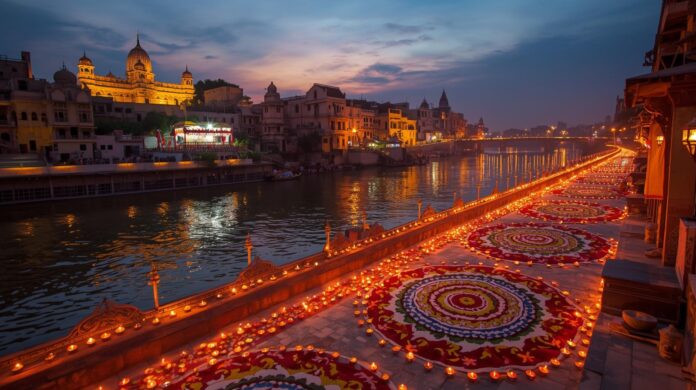
Ayodhya, located on the peaceful banks of the Sarayu River in Uttar Pradesh, is one of the oldest and most sacred cities in India. Known worldwide as the birthplace of Lord Rama, Ayodhya holds immense religious, historical, and cultural importance. Today, it stands as a major pilgrimage destination in India and a growing hub of religious tourism in Uttar Pradesh.
A City Rooted in Ancient History
The name Ayodhya appears in some of the earliest Indian texts, including the Ramayana, where it is described as the magnificent capital of the Ikshvaku dynasty. According to tradition, King Dasharatha ruled from Ayodhya, and it was here that Lord Rama was born and began the epic journey that defines dharma (righteousness) in Hindu philosophy.
Ayodhya also finds mention in Buddhist and Jain literature. For Jains, it is the birthplace of five Tirthankaras, including Rishabhdev (Adinath), the first Tirthankara. Buddhist records indicate that Ayodhya was an important center of learning during the Mauryan and Gupta periods. These layers of belief make Ayodhya a rare spiritual crossroads.
Cultural Soul of Ayodhya
Ayodhya’s culture is deeply devotional, simple, and rooted in bhakti (devotion). Daily life here flows to the rhythm of temple bells, morning aartis, and evening prayers along the Sarayu ghats. The city’s cultural identity is shaped by the values associated with Lord Rama—truth, duty, humility, and compassion.
Traditional music, Ramleela performances, and recitations of the Ramcharitmanas by Tulsidas are central to local life. During festivals, especially Ram Navami and Deepotsav (Diwali), the entire city becomes a living stage—illuminated with lamps, processions, and devotional songs that retell the story of Rama’s return to Ayodhya.
Spiritual Landmarks and Living Heritage
Ayodhya is dotted with temples, ashrams, and historic sites that reflect its long spiritual journey:
- Ram Janmabhoomi / Ram Mandir – The spiritual heart of Ayodhya, believed to mark the birthplace of Lord Rama.
- Hanuman Garhi – A major shrine dedicated to Lord Hanuman, protector of the city.
- Kanak Bhawan – Known for its beautiful idols of Rama and Sita.
- Dashrath Mahal – Associated with King Dasharatha, Rama’s father.
- Saryu Ghats (Ram Ki Paidi) – Sacred riverfront steps where pilgrims gather for ritual baths and evening aarti.
These places are not just monuments—they are active spaces of worship, reflection, and community life.

